<?xml version="1.0" encoding="UTF-8"?>
<rss version="2.0"
	xmlns:content="http://purl.org/rss/1.0/modules/content/"
	xmlns:wfw="http://wellformedweb.org/CommentAPI/"
	xmlns:dc="http://purl.org/dc/elements/1.1/"
	xmlns:atom="http://www.w3.org/2005/Atom"
	xmlns:sy="http://purl.org/rss/1.0/modules/syndication/"
	xmlns:slash="http://purl.org/rss/1.0/modules/slash/"
	>

<channel>
	<title>Kaho Abe</title>
	<atom:link href="http://kahoabe.net/?feed=rss2" rel="self" type="application/rss+xml" />
	<link>http://kahoabe.net</link>
	<description>阿部　香穂</description>
	<lastBuildDate>Fri, 05 Apr 2013 21:37:21 +0000</lastBuildDate>
	<language>en-US</language>
	<sy:updatePeriod>hourly</sy:updatePeriod>
	<sy:updateFrequency>1</sy:updateFrequency>
	<generator>http://wordpress.org/?v=3.5.1</generator>
		<item>
		<title>Lightning Bug Game (Work in Progress as of April 2013)</title>
		<link>http://kahoabe.net/?p=676</link>
		<comments>http://kahoabe.net/?p=676#comments</comments>
		<pubDate>Fri, 05 Apr 2013 21:18:05 +0000</pubDate>
		<dc:creator>kaho</dc:creator>
				<category><![CDATA[Costumes as Game Controllers]]></category>

		<guid isPermaLink="false">http://kahoabe.net/?p=676</guid>
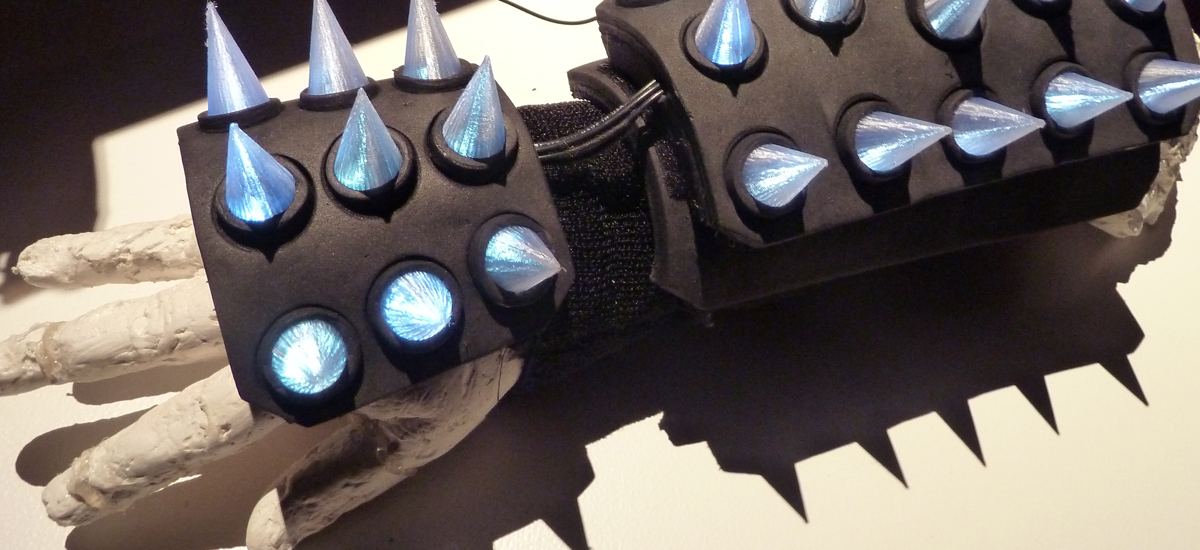
		<description><![CDATA[Lightning Bug Game This game is a work in progress, scheduled to be completed in October 2013 by Kaho Abe, the Artist in Residence at the NYU-Poly Game Innovation Lab in collaboration with Katherine Isbister.  The Development phase prior to October is funded by Eyebeam Art &#38; Technology Center through the Rockefeller Cultural Innovation Fund. This post has been created to show the progress of the game as of April 2013. The Lightning Bug Game is based on a story about a fantastical world of Lightning Bugs. The once peaceful home of the Lightning Bugs is under attack by the smoggy Clouds of Darkness, threatening to overtake the pure air and water around them. Only a few lightning bugs are left &#8212; two must now cooperate together to fight off the evil Dark Clouds to save their home. This interactive installation is an immersive two-person cooperative digital game. Preliminary Research &#38; Inspirations I&#8217;m currently exploring ways in which technology can be embedded into costumes, to add the functionality of a game controller. In most of the digital games we play, there are on-screen avatars controlled by the player. We play the game through the avatar, and often feel emotionally connected to it. But imagine if the player, by wearing a costume, could not only change their appearance to resemble a character in the game, but could also use the costume to play the game itself? I wonder how this would affect the user&#8217;s play. Would it draw them into a more compelling, fully-realized world? We can already see examples of this kind of immersive experience in live-action role playing games and cosplay—an expression of the desire to fully inhabit a character in the story. While, of course, the mechanics of a game are also important, I believe that this act of stepping into a role, transforming from regular person to fantastical superpowered hero, is also a crucial process to consider when creating an immersive experience. Culturally, the act of putting on a costume is often seen as a process of transformation; costumes can signify sense of power that wasn&#8217;t there before &#8212; think of Superman and Wonder Woman. In combination with costumes, ritualized gestures can also help the process of transformation—as in this transformation scene from the &#8220;Kamen Rider&#8221; Japanese television series. Gameplay and Physical Interaction For the last several years my objective has been to make games which utilize technology to encourage face to face interaction. While many digital interactions of today are face-to-screen and can seem isolating, I ultimately believe that technology is a tool that it can be harnessed to enhance face-to-face interactions. The Lightning Bug game requires two players to cooperate with each other in order to battle the Dark Clouds. During the game, players will rely not only on communicating through talking, but also through eyes, body language and touch. It can be said that in this game, technology becomes a secondary element that helps to amplify the ultimate objective of the game &#8212; to [...]]]></description>
		<wfw:commentRss>http://kahoabe.net/?feed=rss2&#038;p=676</wfw:commentRss>
		<slash:comments>0</slash:comments>
		</item>
		<item>
		<title>Playful Arts Festival: Clapping Game Digitized Worksheet</title>
		<link>http://kahoabe.net/?p=659</link>
		<comments>http://kahoabe.net/?p=659#comments</comments>
		<pubDate>Wed, 12 Dec 2012 06:19:16 +0000</pubDate>
		<dc:creator>kaho</dc:creator>
				<category><![CDATA[Workshops]]></category>

		<guid isPermaLink="false">http://kahoabe.net/?p=659</guid>
		<description><![CDATA[PlayfulArtsFest_ClappingGameWorkshop]]></description>
		<wfw:commentRss>http://kahoabe.net/?feed=rss2&#038;p=659</wfw:commentRss>
		<slash:comments>0</slash:comments>
		</item>
		<item>
		<title>Wearable Technology for Clothing &amp; Wearable Technology for Games</title>
		<link>http://kahoabe.net/?p=649</link>
		<comments>http://kahoabe.net/?p=649#comments</comments>
		<pubDate>Tue, 20 Nov 2012 11:20:47 +0000</pubDate>
		<dc:creator>kaho</dc:creator>
				<category><![CDATA[Costumes as Game Controllers]]></category>

		<guid isPermaLink="false">http://kahoabe.net/?p=649</guid>
		<description><![CDATA[My graduate school thesis written in 2005 is a user interface for wearable technology called Discreet Interfaces. Its basic idea revolved around making the technology that is embedded into the garment as noninvasive as possible both by sight and by touch. Therefore, the switches which controlled the technology were hidden, and the materials I used for connectors were as close to any type of material that would be found on traditional clothing. Discreet Interfaces was designed to not disrupt the social messages that our clothes carry, while still wearing embedded technology, and made clothing with technology feel just like clothing without it. When it comes to games, however, the desired effect is the complete opposite &#8212; we want the wearer to be aware that she&#8217;s wearing it. We want her to feel that drastic difference between being a normal person and someone who posses super powers (See previous blog entry). In order to achieve this, we create something that looks out of the ordinary, and feels out of the ordinary. The Ninetendo Power Glove is a wonderful example of Wearable Technology in games. In its ads, it looks futuristic  (armor-like), charged with power (added electrical spark effects), and very cool (worn with Risky Business Ray-Ban sun glasses). It will change you as soon as you wear it. &#8220;Once you put it on, everything else becomes child&#8217;s play.&#8221; &#160;]]></description>
		<wfw:commentRss>http://kahoabe.net/?feed=rss2&#038;p=649</wfw:commentRss>
		<slash:comments>0</slash:comments>
		</item>
		<item>
		<title>Costumes as Game Controllers: Costumes, Power &amp; Transformation</title>
		<link>http://kahoabe.net/?p=595</link>
		<comments>http://kahoabe.net/?p=595#comments</comments>
		<pubDate>Sat, 27 Oct 2012 07:12:24 +0000</pubDate>
		<dc:creator>kaho</dc:creator>
				<category><![CDATA[Costumes as Game Controllers]]></category>

		<guid isPermaLink="false">http://kahoabe.net/?p=595</guid>
		<description><![CDATA[For my new project involving Costumes as Game Controllers, I&#8217;ve been doing a lot of preliminary research. I want to take full advantage of costumes as a form of wearable technology in order to heighten the immersive game experience. I have been approaching this project from many sides: conceptual, aesthetic and technological, and it&#8217;s been quite exciting and at times an overwhelming experience, even though it&#8217;s just begun. This will be the first in a series of posts on this blog updating my progress. When I worked briefly in costumes design in film and theater, I realized how important costumes were for the overall story. What an actor wears is one of the many powerful tools that help tell the story. Not only is this true from the audience&#8217;s point of view but also it was crucial for the wearer too, by helping her fall into the role better and &#8220;feel&#8221; more like the character in the script. This is my starting point. Costumes and Power Halloween is around the corner. It&#8217;s a perfect time to start thinking about costumes and what they represent. Super hero costumes are popular, because as an adult or child, it&#8217;s easy to idolize these characters with super human strengths. Just look at online stores selling Halloween costumes  &#8212; you can&#8217;t go far without seeing Superman, Spiderman and Batman costumes. When thinking of Costumes and Power, super heroes are the first thing that come to mind for me. A silky red cape, a brightly colored muscle-hugging suit with matching tights, and the large &#8220;S&#8221; on the chest are familiar to many as something that is worn by Superman when he is using his super powers. When he&#8217;s not Superman, he wears very normal, boring clothing hiding his true strengths. So during Halloween, as the kid wearing the costume can feel like a super hero, as the actor wearing her costume feels more like her part, the wearer can feel powerful donning a costume that embodies power. &#8220;Henshin!&#8221; It&#8217;s not just about the worn costume that can emphasize the power that the wearer holds, but the process of transformation from a regular person to someone who posses special powers can also add to the notion of power. There is a word for this in Japanese. It&#8217;s &#8220;henshin&#8221; (変身）which literally means &#8220;transforming the body&#8221;, but in the context of anime and super-heroes, it also includes the transformation of clothes. The Japanese TV series, Kamen Rider, is a great example of &#8220;henshin.&#8221; In this video clip, there are henshins after henshins of past Kamen Riders. Pay attention to the changing of costumes. Kamen Rider Riderman (1:01) is particularly interesting because the act of putting on his mask triggers the transformation. Gestures and Poses too! These examples also remind me how important gestures are to show power. The gestures in Kamen rider are large and quick, and are obviously a important part of the henshin process. Superman also uses gestures and poses to express power. Gestures and poses can [...]]]></description>
		<wfw:commentRss>http://kahoabe.net/?feed=rss2&#038;p=595</wfw:commentRss>
		<slash:comments>0</slash:comments>
		</item>
		<item>
		<title>Movies as Inspiration for Physical Games &amp; Jean-Claude Van Jam</title>
		<link>http://kahoabe.net/?p=564</link>
		<comments>http://kahoabe.net/?p=564#comments</comments>
		<pubDate>Wed, 01 Aug 2012 21:13:23 +0000</pubDate>
		<dc:creator>kaho</dc:creator>
				<category><![CDATA[Eyebeam]]></category>
		<category><![CDATA[Hit Me!]]></category>
		<category><![CDATA[Inspiration]]></category>
		<category><![CDATA[tweeted!]]></category>

		<guid isPermaLink="false">http://kahoabe.net/?p=564</guid>
		<description><![CDATA[While I do tend to like foreign films and independent films most, I have always had a soft spot for action films, even the gratuitously violent ones. No matter how fantastical or b-class it might be, I find myself jumping in my seat, cringing, cheering for the good guy and on occasion covering my mouth in disbelief. I am a sucker for this stuff, no doubt. When I designed Hit Me! I was looking for inspiration &#8212; anything &#8212; with the idea in mind that I wanted to create a game that was intense and exciting &#8212; not just to play but also to watch. I went through my mental rolodex of action film memories, and stopped at Jean Claude Van Damme&#8217;s Lionheart. I studied games such as Twister, Sumo and Fencing for inspiration too, but at the end the fight scenes from Lionheart had a big influence on the game. The circle of spectators, the performance, the spectacle of the 2 fighters fighting a bare fisted, no holds barred fight, and the raw, spontaneous setting of the abandoned parking lot where the fights took place &#8212; It had it all. These were elements that I wanted to incorporate into the look and feel of Hit Me! Here is an example: Movies are wonderful inspirations especially for games played in the physical world, because they contain scenarios that connect space, story and characters. Also because it uses a visual language that has been understood by viewers. The latter is actually an useful tool. For example, think of all the nail biting scenarios in all of the action films you have seen over the years &#8212; there are certainly patterns we can identify &#8212; not just in story but also with the characters and the environment that is involved. These patterns can be used and recreated in the game in order to evoke the same feelings in the player and also the spectators. So I am so excited by Jean-Claude Van Jam, because it highlights the potential of using films as inspiration for games. I can&#8217;t wait to see what parts of the films the jammers will use in their games. I hope there will be physical games too! Jean-Claude Van Jam &#8212; August 17-19, 2012 7PM Eyebeam Art &#38; Technology Center (540 W 21st Street, NYC) Sign up at http://jeanclaudevanjam.com/]]></description>
		<wfw:commentRss>http://kahoabe.net/?feed=rss2&#038;p=564</wfw:commentRss>
		<slash:comments>1</slash:comments>
		</item>
		<item>
		<title>Ninja Shadow Warrior Custom Cabinet Specs</title>
		<link>http://kahoabe.net/?p=547</link>
		<comments>http://kahoabe.net/?p=547#comments</comments>
		<pubDate>Tue, 24 Jul 2012 02:41:15 +0000</pubDate>
		<dc:creator>kaho</dc:creator>
				<category><![CDATA[Game Cabinet]]></category>
		<category><![CDATA[How-to's & Tutorials]]></category>
		<category><![CDATA[Ninja Shadow Warrior]]></category>

		<guid isPermaLink="false">http://kahoabe.net/?p=547</guid>
		<description><![CDATA[Here are the specs for the cabinet that I sent to the show in Paris. NSW Cabinet Technical Drawing]]></description>
		<wfw:commentRss>http://kahoabe.net/?feed=rss2&#038;p=547</wfw:commentRss>
		<slash:comments>0</slash:comments>
		</item>
		<item>
		<title>Hacking a Mouse for Closet Light Start Button</title>
		<link>http://kahoabe.net/?p=543</link>
		<comments>http://kahoabe.net/?p=543#comments</comments>
		<pubDate>Tue, 24 Jul 2012 02:23:25 +0000</pubDate>
		<dc:creator>kaho</dc:creator>
				<category><![CDATA[Game Cabinet]]></category>
		<category><![CDATA[How-to's & Tutorials]]></category>
		<category><![CDATA[Ninja Shadow Warrior]]></category>
		<category><![CDATA[Physical Computing]]></category>

		<guid isPermaLink="false">http://kahoabe.net/?p=543</guid>
		<description><![CDATA[Ninja Shadow Warrior in its first phases used the Arduino to attach the Closet Light Start Button (modded with Normally Open Momentary Switch instead of On-Off Switch). It was being a bit unreliable, so I changed to just connecting it to a mouse &#8212; Syed from Babycastles suggested it! I used a Logitech Mouse that Syed had left over from one of his One Button workshops. Here are the wires I used to connect it to the Closet Light Start Button. I brought 4 back up start buttons to Paris, in case the start button busted during the show.]]></description>
		<wfw:commentRss>http://kahoabe.net/?feed=rss2&#038;p=543</wfw:commentRss>
		<slash:comments>0</slash:comments>
		</item>
		<item>
		<title>Ninja Shadow Warrior Cabinet at Game Innovation Lab Demo Day</title>
		<link>http://kahoabe.net/?p=520</link>
		<comments>http://kahoabe.net/?p=520#comments</comments>
		<pubDate>Thu, 03 May 2012 22:39:23 +0000</pubDate>
		<dc:creator>kaho</dc:creator>
				<category><![CDATA[Game Cabinet]]></category>
		<category><![CDATA[Ninja Shadow Warrior]]></category>
		<category><![CDATA[NYU-Poly Game Innovation Lab]]></category>

		<guid isPermaLink="false">http://kahoabe.net/?p=520</guid>
		<description><![CDATA[There is nothing that a little black vinyl, a vinyl cutter, some wood, a band saw, paint and a closet light hack can&#8217;t do! This cabinet is sort of a bridge between the game and the physical space where it is located. Some questions I asked myself: How can I best communicate the content of the game cabinet to the physical space around it? How can I create a playful environment around the game itself, so that it encourages people to play and entices people to try out the game if they haven&#8217;t before? Some design strategies used for the cabinet are: Playing with the scale of objects to create whimsy (large scale button &#38; throwing stars) Very easy 1 button interface (large start button) Combining 2 seemingly contrasting styles: cute &#38; fierce bunny ninjas in action poses Using ninja theme from the game for the decals &#8212; based in arcade cabinets of the 80&#8242;s, where there were a lot of action images of the characters of the games on the cabinet Use of florescent lighting which makes photos look better by washing out facial details as on many Purikura kiosks &#8212; the idea here is that the better the photos look, the more people would want to play (although I guess, some of the poses are too silly for that!)]]></description>
		<wfw:commentRss>http://kahoabe.net/?feed=rss2&#038;p=520</wfw:commentRss>
		<slash:comments>0</slash:comments>
		</item>
		<item>
		<title>Beyond the Joystick workshop series again this Fall at Eyebeam!</title>
		<link>http://kahoabe.net/?p=332</link>
		<comments>http://kahoabe.net/?p=332#comments</comments>
		<pubDate>Sat, 17 Sep 2011 10:25:10 +0000</pubDate>
		<dc:creator>kaho</dc:creator>
				<category><![CDATA[Eyebeam]]></category>
		<category><![CDATA[Workshops]]></category>

		<guid isPermaLink="false">http://kahoabe.net/notes/?p=332</guid>
		<description><![CDATA[I am teaching this workshop again starting next week September 21st &#8211; October 26th, Wednesdays from 6:30-9pm. For more info go here: http://www.eyebeam.org/events/beyond-the-joystick-introduction-to-alternative-physical-interfaces-0]]></description>
		<wfw:commentRss>http://kahoabe.net/?feed=rss2&#038;p=332</wfw:commentRss>
		<slash:comments>0</slash:comments>
		</item>
		<item>
		<title>Hacking Cheap Closet Lights to be Obnoxiously Large Game Buttons</title>
		<link>http://kahoabe.net/?p=259</link>
		<comments>http://kahoabe.net/?p=259#comments</comments>
		<pubDate>Sat, 02 Jul 2011 14:29:51 +0000</pubDate>
		<dc:creator>kaho</dc:creator>
				<category><![CDATA[Eyebeam]]></category>
		<category><![CDATA[How-to's & Tutorials]]></category>
		<category><![CDATA[Ninja Shadow Warrior]]></category>
		<category><![CDATA[Physical Computing]]></category>

		<guid isPermaLink="false">http://kahoabe.net/notes/?p=259</guid>
		<description><![CDATA[I recently needed an obnoxiously large push button for the Ninja Shadow Warrior game cabinet. I have been working on making the cabinet whimsical by adding oversized elements to it. I found a 5 dollar pack of 2 lights at Home Depot and took them apart. I then opened it and did the following: I replaced the on-off switch inside the light with a momentary snap switch that is normally open and glued it down. I rewired the snap switch with the usual &#8220;button circuit&#8221; &#8211;  a 10k resistor, ground, voltage, and a wire to pin2 on the Arduino. I rewired the light bulb so that the Arduino can control it from pin8, via reed relay. I mounted it on to the game cabinet I used the digital Button code example and now I have an obnoxiously large push button made cheaply. I separated the light from the switch part so that the game can flash the button light whenever it wants to bring attention to the push button, even if it hasn&#8217;t been pushed yet.]]></description>
		<wfw:commentRss>http://kahoabe.net/?feed=rss2&#038;p=259</wfw:commentRss>
		<slash:comments>0</slash:comments>
		</item>
	</channel>
</rss>
<!-- Start of StatCounter Code for Default Guide -->
<script type="text/javascript">
var sc_project=6010529; 
var sc_invisible=1; 
var sc_security="c2a32278"; 
</script>
<script type="text/javascript"
src="http://www.statcounter.com/counter/counter.js"></script>
<noscript><div class="statcounter"><a title="vBulletin
stats" href="http://statcounter.com/vbulletin/"
target="_blank"><img class="statcounter"
src="http://c.statcounter.com/6010529/0/c2a32278/1/"
alt="vBulletin stats"></a></div></noscript>
<!-- End of StatCounter Code for Default Guide -->